

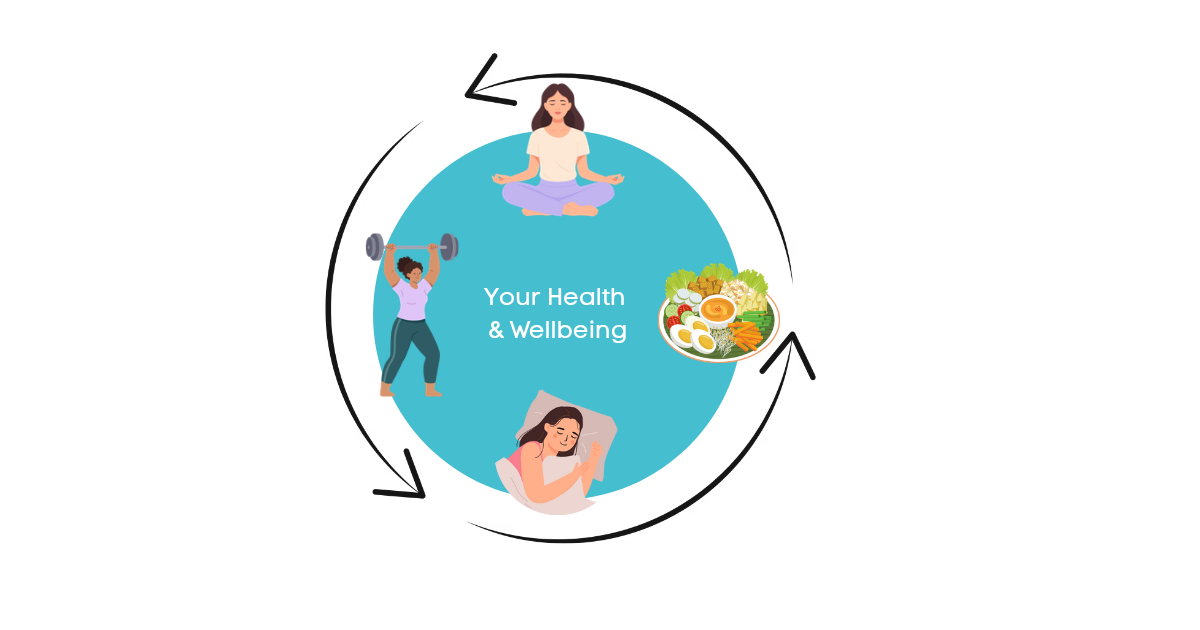
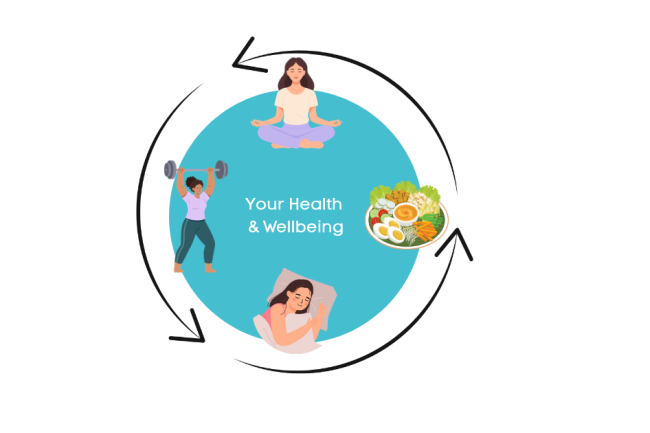
When people think about improving their health, they often reach for the obvious steps; start a new exercise routine, or overhaul their diet. These are worthwhile steps. But lasting wellbeing doesn’t come from a single change. It comes from understanding that your body is an interconnected system, and that four key areas work together to support every aspect of how you feel, move, and recover.
No single pillar is more important than another. Neglect one, and the others are carrying a heavier load. Invest in all four, and you’ll find that progress in each area begins to accelerate the others.
Pillar 1 – Sleep and Rest
Sleep is not downtime, it is the foundation on which every other pillar stands. During sleep, your body repairs damaged tissue, consolidates motor learning and stores memory data, regulates hormones, and clears metabolic waste from the brain. Without sufficient quality sleep, everything else becomes harder. Your muscles recover more slowly, your stress response becomes dysregulated, and your appetite hormones shift in ways that make good nutritional choices genuinely more difficult.
Most adults need between 7 and 9 hours of sleep per night, but quality matters as much as quantity. Deep, uninterrupted sleep cycles are where the real restoration happens. Rest in its broader sense, including deliberate periods of low-stimulus downtime during the day, also plays a role in how well your nervous system manages the demands placed upon it.
If you’re putting in the training hours but not recovering properly, you’re leaving out one of the most important elements of fitness. Sleep is where adaptation actually occurs.
Connects to: stress regulation, recovery, energy for exercise, appetite control
Pillar 2 – Stress Reduction
Stress is a biological response that evolved to keep us safe. In short bursts, it sharpens focus and drives performance. But when it becomes chronic, a long term background hum of elevated cortisol, tension, and mental load, it begins to quietly undermine your health across every dimension.
Chronically elevated stress hormones suppress immune function, impair digestion, disrupt sleep patterns, increase inflammation, and interfere with muscle recovery. They can drive cravings for high-calorie foods and reduce motivation to exercise. Stress doesn’t just feel unpleasant; it has measurable physical consequences that show up in how the body moves, heals, and performs.
Stress reduction isn’t about eliminating challenge from your life. It’s about building the capacity to recover from it. Practices that support this include breathwork, time in nature, social connection, enjoyable hobbies, and simply building intentional downtime into a busy schedule.
Connects to: sleep quality, reducing inflammation, gut health, exercise tolerance
Pillar 3 – Nutrition
Food is information. Every meal sends signals to your body about what resources are available, how much energy to produce, how aggressively to repair tissue, and how to regulate inflammation. Nutrition underpins every other pillar; it fuels exercise, provides the raw materials for recovery, influences mood and stress resilience, and even affects sleep quality.
 Good nutrition doesn’t require perfection or complicated protocols. The fundamentals are clear: prioritise whole foods, eat adequate protein to support muscle maintenance and repair, stay well hydrated, and aim for dietary variety that supports a diverse gut microbiome. Consistent, balanced eating patterns outperform short-term restrictive approaches almost every time.
For active individuals, timing and composition of meals around training can also make a meaningful difference to both performance and recovery. But before worrying about the details, the foundations matter most.
Connects to: energy, recovery, mood, inflammation, sleep quality
Pillar 4 – Exercise
Movement is medicine. Regular physical activity is one of the most well-evidenced interventions for long-term health, improving cardiovascular function, maintaining musculoskeletal strength and flexibility, supporting mental health, regulating blood sugar, and reducing the risk of a wide range of chronic conditions. Exercise also makes the other pillars more effective: it deepens sleep, reduces the physiological impact of stress, and improves how the body utilises nutrients.
The type of exercise matters less than the consistency of it. A mix of cardiovascular work, strength training, and mobility practice provides the broadest range of benefits. But finding movement you genuinely enjoy, and that fits your life, is far more important than following any specific programme.
Crucially, exercise also creates a physical stress on the body. Without the right nutrition to support it and the rest to recover from it, training loads that should build you up can begin to break you down. All four pillars work together.
Connects to: sleep quality, stress resilience, nutritional demands, recovery
The bigger picture – Why the connections between the pillars matter
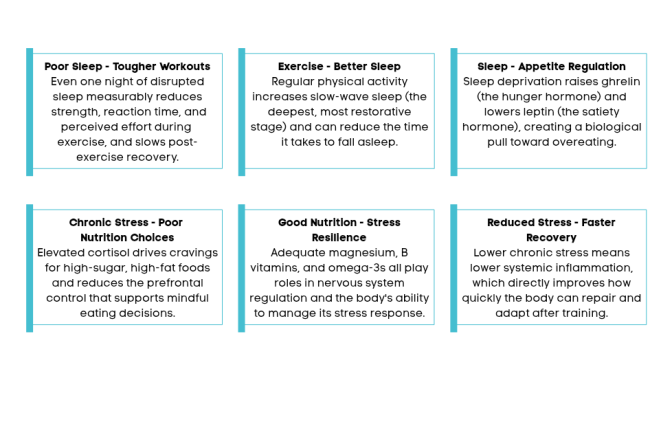
Each pillar supports the others. Which means that improvements in one area often create a positive ripple effect. Equally, neglecting one area tends to drag the others down. Here are just a few of the ways these four pillars interact in real life.
Where do you start – Without creating overwhelm?
The good news is that you don’t need to overhaul everything at once. Even modest, consistent improvements across all four areas, rather than dramatic changes all in one go, will produce better results over time. The goal is balance, not perfection.
As a sports therapist and health coach, I work with clients not just on injury and physical performance, but on the broader picture of what supports a body that moves well and recovers well. If you’d like to talk through where your four pillars currently stand and where small changes might make the biggest difference, get in touch.